
How to Colour a Grey Beard Naturally
Share
Grey in the beard hits differently.
For some men, it looks sharp. For others, it arrives too early, spreads unevenly, and starts making the beard look older, patchier, or more washed out than the man wearing it. The goal is not always to look younger. Often, it is simply to look more like yourself again.
That is where natural beard colouring comes in.
If you want to colour a grey beard naturally, the key is understanding what plant-based beard colour can do, what it cannot do, and how to prepare your beard properly before applying it. Grey beard hair is often more resistant than darker hair, so the process needs patience, good preparation, and realistic expectations.
This guide explains how to colour a grey beard naturally, especially if you prefer a PPD-free, ammonia-free approach.
What does it mean to colour a grey beard naturally?
When people talk about colouring a grey beard naturally, they are usually referring to beard colour made with plant-derived powders such as henna, indigo, amla, neem, bhringraj, or similar botanical ingredients.
These powders work differently from conventional oxidative hair dyes.
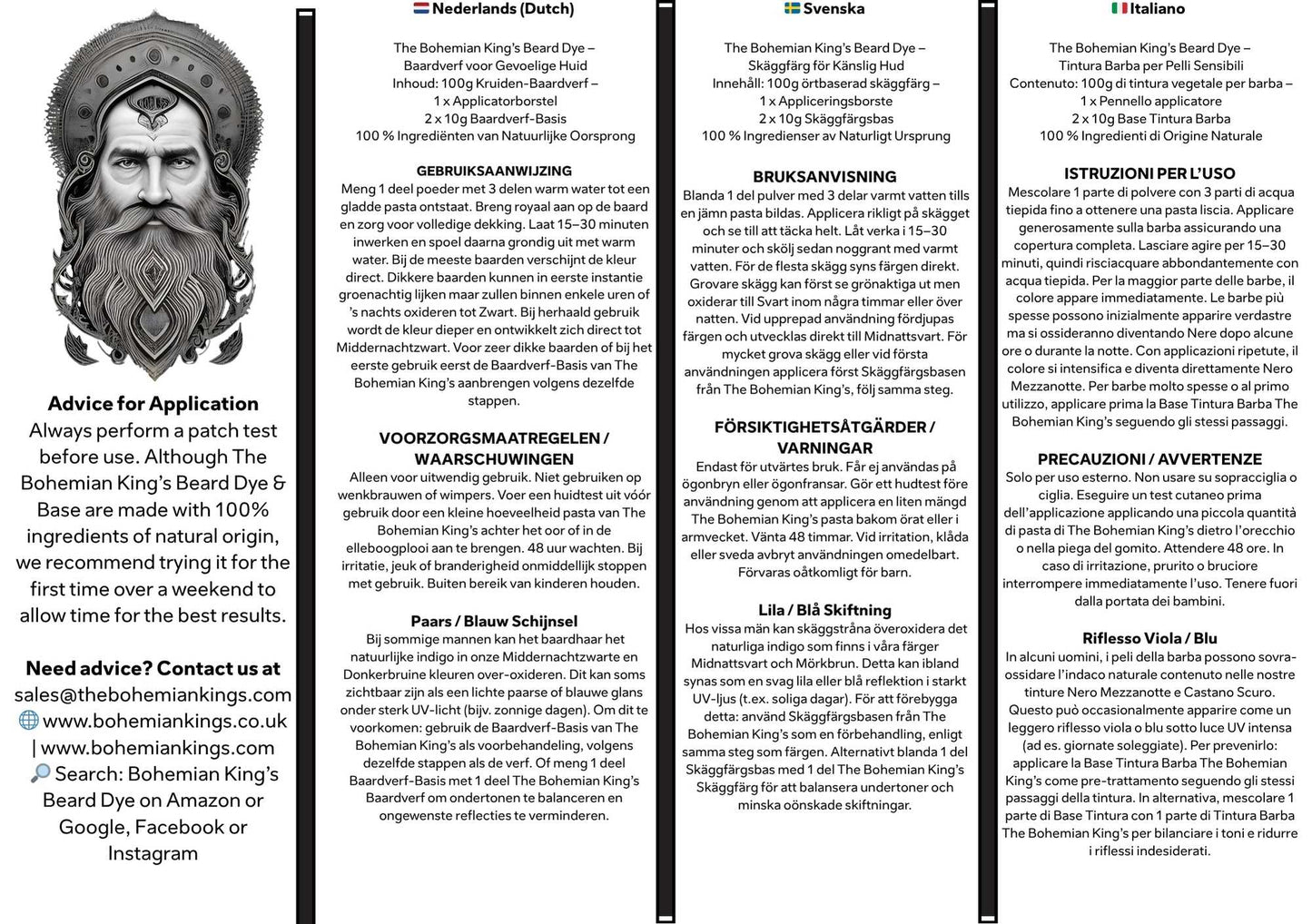
Traditional permanent dyes often use chemical colour systems designed to open the hair fibre and create a fast colour change. Many permanent and semi-permanent dyes may contain PPD, also known as paraphenylenediamine, which is known to irritate skin or cause allergic reactions in some people.
Plant-based beard dyes usually colour the beard more gradually. They coat and bind to the hair rather than working in exactly the same way as conventional permanent dye. This can create a more natural-looking result, especially on facial hair, where block colour can look fake very quickly.
The trade-off is simple: natural beard colour usually needs better preparation and a little more patience.
Why grey beard hair can be harder to colour
Grey beard hair is not just “normal beard hair without colour”.
It is often coarser, drier, more wiry, and more resistant to colour uptake. That is why some men find that the moustache colours differently from the chin, or that the sides of the beard hold colour better than the front.
This is normal.
The beard is not one uniform surface. Different areas can have different texture, density, oil levels, and porosity. If your beard has been exposed to beard oils, balms, waxes, shampoo residue, hard water, or styling products, colour may not attach evenly.
This is why preparation matters.
A rushed application on an oily beard is one of the easiest ways to get weak results.
Step 1: Choose the right beard colour
Before applying any beard dye, decide what result you actually want.
A common mistake is choosing a shade that is too dark. On scalp hair, dark colour can sometimes blend in. On a beard, especially a short beard, colour that is too dark can look harsh against the skin.
For most men colouring grey, the best result is usually one step softer than instinct suggests.
If your beard was naturally dark brown, you may not need black. If you have a mixed grey and brown beard, a brown or dark brown shade may give a more believable finish. If your beard is mostly white or silver, expect a more gradual result, especially with plant-based colour.
The aim should be natural depth, not shoe-polish darkness.
Step 2: Clean the beard properly
Start with a clean beard.
Wash your beard before colouring to remove oils, balm, wax, sweat, and residue. Avoid applying beard oil before dyeing. Oil can create a barrier between the beard hair and the colour paste.
After washing, towel dry the beard. The beard should not be dripping wet, but it should also not be heavily coated with product.
A clean beard gives the colour a better chance to grip.
Step 3: Always do a patch test first
Do not skip the patch test.
Natural does not mean risk-free. Any cosmetic product applied to the skin can potentially cause irritation or sensitivity in some users. The NHS advises following the product instructions, wearing gloves, and testing before using hair dye.
For beard dye, apply a small amount of prepared paste to a small patch of skin, such as behind the ear or on the inner elbow. Wait 48 hours. If irritation, itching, burning, redness, or discomfort occurs, do not use the product.
This step is boring. It is also non-negotiable.
Step 4: Use a pre-treatment if recommended
Grey beard hair often benefits from a pre-treatment or colour base step.
A beard dye colour base is designed to prepare resistant grey hair before the main colour is applied. This can help support a more even-looking result, especially where grey hair struggles to take colour.
This step is particularly useful if:
- your beard is mostly grey or white
- your beard hair is coarse or wiry
- previous beard dyes have looked uneven
- the chin or moustache area does not colour well
- you are using a darker shade such as dark brown or black
Think of it as groundwork. If the beard is not properly prepared, the final colour may look weaker, cooler, or less even.
Step 5: Mix the beard dye into a smooth paste
Most plant-based beard dyes are mixed with warm water to create a paste.
The paste should be smooth enough to apply evenly, but not so watery that it runs down the face. A yoghurt-like texture is usually the target. If the paste is too thick, it can sit on top of the beard instead of working into the hair. If it is too thin, it becomes messy and harder to control.
Apply carefully with gloves and a brush. Work the paste into the beard, especially where grey hair is densest.
Do not just paint the surface. Grey beard hair needs full contact.
Step 6: Leave it on for the correct time
Follow the timing on the product instructions.
Leaving beard dye on for too short a time may give weak coverage. Leaving it on for too long may create a result that is darker or cooler than intended, depending on the formula and the shade.
With plant-based beard colour, results can also continue to develop after rinsing. Indigo-based colours, in particular, may deepen over the following 24–48 hours.
This means the colour you see immediately after rinsing may not be the final result.
Do not panic-rinse, reapply, and overcorrect within the first hour. Give the colour time to settle.
Step 7: Rinse with warm water only
After the development time, rinse thoroughly with warm water.
Avoid shampoo immediately after colouring unless your product instructions say otherwise. Shampooing too soon can strip away some of the fresh colour before it has had time to settle.
For best results, avoid beard oil, heavy balm, or harsh washing for the first 24 hours after colouring.
Let the colour oxidise and settle properly.
What result should you expect?
A natural beard dye should make the beard look more balanced, not artificially painted.
On mixed grey beards, the result is often a softer blend where the grey is reduced rather than completely erased. This can be a good thing. Full block coverage can look unnatural on men, especially around the moustache and jawline.
On very white or resistant grey hair, you may need more than one application to build depth.
The first application may soften the grey. The second may deepen the result. This is normal with plant-based colouring systems.
Beard colour is not just about darkness. It is about tone, balance, and how believable the final beard looks against your skin.
Common mistakes when colouring a grey beard naturally
The biggest mistake is applying colour to an oily beard.
The second biggest mistake is choosing black when dark brown would look better.
Other common mistakes include mixing the paste too thin, not applying enough product, skipping resistant areas, shampooing too soon after rinsing, or expecting plant-based colour to behave exactly like conventional permanent dye.
Natural beard dye rewards preparation.
Rush it and the results can be patchy. Do it properly and the finish usually looks more controlled, softer, and more natural.
Is natural beard dye suitable for sensitive skin?
It may suit men who want to avoid certain conventional dye ingredients such as PPD or ammonia, but no beard dye should be presented as suitable for everyone.
If you have very sensitive skin, a history of reactions, eczema, broken skin, or previous reactions to hair dye or black henna tattoos, take extra care. The NHS notes that people who have reacted to hair dye or black henna tattoos may be more at risk of future reactions to products containing PPD.
Always read the full ingredient list and warnings before use.
If in doubt, seek medical advice before colouring your beard.
Why men choose plant-based beard colour
Many men choose plant-based beard colour because they want a more natural-looking finish and a slower, more controlled approach to covering grey.
For beard hair, that matters.
The beard sits directly on the face. If the colour is too flat, too dark, or too uniform, people notice. A good beard colour should make you look sharper without making it obvious that you have dyed your beard.
That is the real win.
Not younger. More yourself.
Final thoughts
Colouring a grey beard naturally is not complicated, but it does need the right approach.
Choose the right shade. Clean the beard properly. Patch test first. Use a colour base if your grey is resistant. Apply enough paste. Give the colour time to develop. Avoid rushing the aftercare.
A grey beard does not need to be hidden completely. It just needs to be brought back under control.
For men who want a PPD-free, ammonia-free option, The Bohemian King’s beard dye range is designed for a more considered beard colour ritual using plant-derived powders and a slower, more natural-looking finish.
Grey is not the enemy.
Neglect is.