
Best Beard Dye Colours for 2026 (EU Guide): Ranked
Image Notice: Images are representative illustrations and have been digitally enhanced for clarity. Individual colour results will vary depending on your natural beard colour, grey coverage, hair texture and application.
Why Choosing the Right Beard Dye Shade Matters in 2026
Selecting the right beard dye shade is often more important than choosing the darkest option. A shade that is too dark can look obvious, while a shade that is too light may leave grey hairs more noticeable than expected.
This guide compares four popular beard dye shades for men in 2026, explains who each shade is best suited to and helps you choose a more natural-looking match for your beard.
- Blend grey beard hair more naturally
- Choose a shade that works with your existing beard colour
- Avoid an overly uniform or painted-looking result
- Create colour that looks believable in everyday lighting
Beard hair is often coarser, drier and more uneven in colour than scalp hair. That is why shade selection, beard preparation and realistic expectations all matter.
The Bohemian King’s
Find the Shade That Matches Your Beard
Compare Light Brown, Brown, Dark Brown and Midnight Black beard dye. Each shade is formulated without PPD or ammonia and includes Beard Dye Colour Base.
Compare All Four Shades →Quick Beard Dye Shade Finder
Use your existing beard colour as the starting point. Beard hair does not always match scalp hair, so judge the shade against your facial hair rather than your head hair alone.
| Natural beard colour | Shade to explore | Typical goal |
|---|---|---|
| Dark blonde or light brown | Light Brown | Softer grey blending with less contrast |
| Medium brown | Brown | Warm, balanced colour without going too dark |
| Dark brown | Dark Brown | Deeper grey blending while preserving a brown tone |
| Naturally black | Midnight Black | Strongest contrast reduction on naturally black beards |
Important: This is a starting guide, not a guarantee. Results vary according to your original beard colour, the amount of grey, hair texture, preparation, application and oxidation.
The Most Popular Beard Dye Colours for Men in 2026
1) Dark Brown – A Versatile Choice for Naturally Dark Beards

Why it is popular: Dark Brown is often chosen by men with naturally medium-to-dark brown facial hair who want to reduce the contrast created by grey hairs without moving all the way to black.
Compared with a black shade, Dark Brown can create a softer result on naturally brown beards and reduce the risk of an overly uniform appearance.
Best suited for:
- Medium-to-dark brown facial hair
- Salt-and-pepper beards with a brown base
- First-time users who already have naturally dark brown facial hair
- Men seeking a defined but still brown-toned result
Explore Dark Brown Beard Dye →
2) Midnight Black – Best Reserved for Naturally Black Beards

Why it remains popular: Midnight Black is intended for men whose natural beard is already black or extremely dark. It creates the strongest visual contrast against white or grey beard hair.
Important reality: Black is the least forgiving shade when the natural beard is actually brown. Choosing Midnight Black for a brown beard can produce more contrast than expected, particularly in daylight.
Coarse white beard hair may also take colour differently from pigmented hair. Proper preparation and controlled application matter more with the darkest shade.
Best suited for:
- Naturally black facial hair
- Very dark, dense or full beards
- Men who already know that black matches their natural beard
- Salt-and-pepper beards with a genuinely black base colour
Explore Midnight Black Beard Dye →
3) Brown – A Balanced Mid-Brown Option
Why it is useful: Brown sits between Light Brown and Dark Brown. It is intended for naturally medium-brown facial hair and for men who want warmth without jumping to a very dark result.
This shade can be useful where the beard contains several natural tones and the aim is to soften the appearance of greys rather than create a single flat block of colour.
Best suited for:
- Naturally medium-brown facial hair
- Uneven greying patterns
- Men who want warmth without excessive depth
- Existing users refining a shade that previously looked too light or too dark
4) Light Brown – A Softer Option for Early Greying
Why it matters: Light Brown is the least intense shade in the range. It is generally better suited to men with naturally light brown or dark blonde facial hair.
It is often chosen by first-time users who want to reduce the contrast created by grey hairs rather than create a dramatically darker beard.
Best suited for:
- Light brown or dark blonde facial hair
- Early stages of greying
- Men who want a softer, lower-contrast result
- Those whose natural beard would look too dark in Brown or Dark Brown
Explore Light Brown Beard Dye →
Why Beard Dye Colour Base Matters
Grey beard hair can be coarse, wiry and more resistant to colour than pigmented hair. Preparing the beard before the main colour application can help support a more even result.
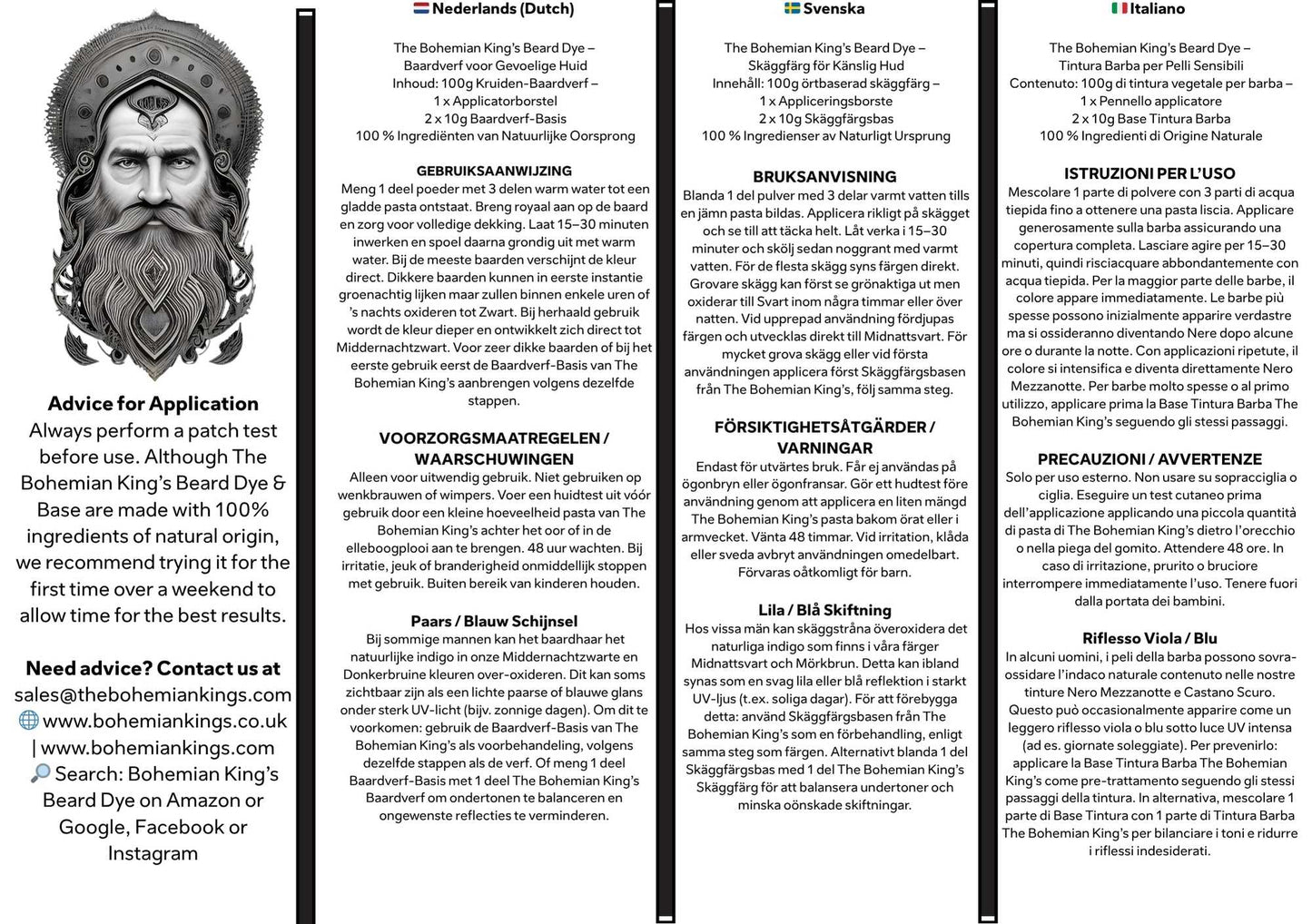
Each The Bohemian King’s beard dye pack includes 20 g Beard Dye Colour Base. It is used as a preparation step before the main beard dye, particularly where the beard contains coarse, resistant or heavily grey areas.
- Helps prepare coarse grey beard hair before colour application
- Supports a more consistent application routine
- Included with every beard dye shade
- Useful for darker shades and resistant grey areas
Every Shade Includes Beard Dye Colour Base
Choose your shade first, then follow the preparation and application instructions carefully. The Base is included to support preparation before the main colour step.
View the Complete Beard Dye Range →Quick Beard Dye Shade Comparison
| Shade | Best starting point | Overall depth | Main caution |
|---|---|---|---|
| Light Brown | Light brown or dark blonde beard | Lightest | May be too subtle for naturally dark facial hair |
| Brown | Medium-brown beard | Medium | Can look too warm or light on very dark beards |
| Dark Brown | Dark-brown beard | Deep | May be too dark for medium or light-brown facial hair |
| Midnight Black | Naturally black beard | Darkest | Can look too severe on naturally brown beards |
Need More Help Before Choosing?
- How to Colour a Grey Beard Naturally
- How to Apply The Bohemian King’s Beard Dye
- The 10 Most Popular Beard Styles in 2026
Frequently Asked Questions About Beard Dye Shades
Which beard dye colour looks most natural?
The shade closest to your existing beard colour will usually create the most natural-looking result. Do not automatically choose the darkest shade simply because your beard contains a high percentage of grey.
Is Dark Brown better than Midnight Black?
Neither is universally better. Dark Brown is normally more appropriate for naturally brown beards, while Midnight Black is intended for naturally black facial hair.
Which shade is best for a grey beard?
The correct shade depends primarily on the original pigmented colour of your beard, not only on the amount of grey. Look at the darker hairs that remain and use those as your guide.
Should beard dye match head hair?
Not necessarily. Beard hair may be naturally darker, lighter, warmer or more varied than scalp hair. Choose according to the facial hair you actually have.
Can beard dye look darker immediately after application?
Plant-based beard colour can continue developing during the 48 hours after application. Follow the instructions and assess the finished tone after oxidation rather than immediately after rinsing.
Is beard dye formulated without PPD risk-free?
No cosmetic colour product is completely risk-free. Always follow the instructions and complete a patch test 48 hours before use. Individual results and reactions can vary.
Ready to Compare the Four Shades?
Explore Light Brown, Brown, Dark Brown and Midnight Black. Each beard dye is formulated without PPD or ammonia and includes Beard Dye Colour Base.
Shop Beard Dye Shades →Safety Note
Always follow the product instructions and complete a patch test 48 hours before use. Stop using the product if irritation occurs. For general information about reactions to hair dye, see the NHS guidance on hair dye reactions.