
Beard Dye Reactions: What to Check Before You Apply
Share
Image Notice: Images are representative illustrations and have been digitally enhanced for clarity. They are intended to illustrate beard care and patch testing and are not photographs of actual customers or guaranteed outcomes.
Beard dye is widely used by men to refresh or restore the appearance of their beard. As with any cosmetic product, individual skin responses can vary. Understanding what to check before colouring your beard can help you make a more informed choice and follow good application practices.
This guide explains why patch testing matters, outlines factors that may contribute to beard dye reactions and highlights practical steps to consider before applying any beard dye product.
Understanding Beard Dye Reactions
Some people may notice itching, redness, dryness, swelling or general discomfort after using a hair or beard colour product. These signs can have different causes, and it is not possible to diagnose the cause from appearance alone.
Individual responses can vary according to the product, the ingredients, previous exposure, the condition of the skin and how the product was prepared and applied.
If you have previously experienced a significant reaction to a cosmetic colour product, seek advice from an appropriate healthcare professional before using another dye.
What Can Contribute to a Beard Dye Reaction?
Several factors may influence how skin responds to a beard dye product:
- Individual sensitivity: A person may respond differently to a particular ingredient or formulation.
- Previous exposure: Skin responses can change over time, even when a product or ingredient has been used before.
- Application to irritated skin: Cuts, shaving irritation, dryness or broken skin may increase discomfort.
- Leaving the product on too long: Always follow the stated application time.
- Incorrect mixing or use: Changing the recommended ratio or application method can affect the experience and result.
- Incomplete rinsing: Residue left on the beard or skin may contribute to discomfort.
Do not apply beard dye to broken, inflamed or recently irritated skin. Follow the product instructions and stop using the product if irritation occurs.
Why PPD Receives Attention in Hair Dye Discussions
PPD, or p-phenylenediamine, is an ingredient used in many permanent oxidative hair dyes. It is one of the ingredients consumers may look for when reviewing a product label, particularly if they have personal concerns or previous experience with oxidative colour products.
The Bohemian King’s beard dye is formulated without PPD or ammonia. This is a factual formulation choice, but it does not mean that the product is completely risk-free or suitable for every individual.
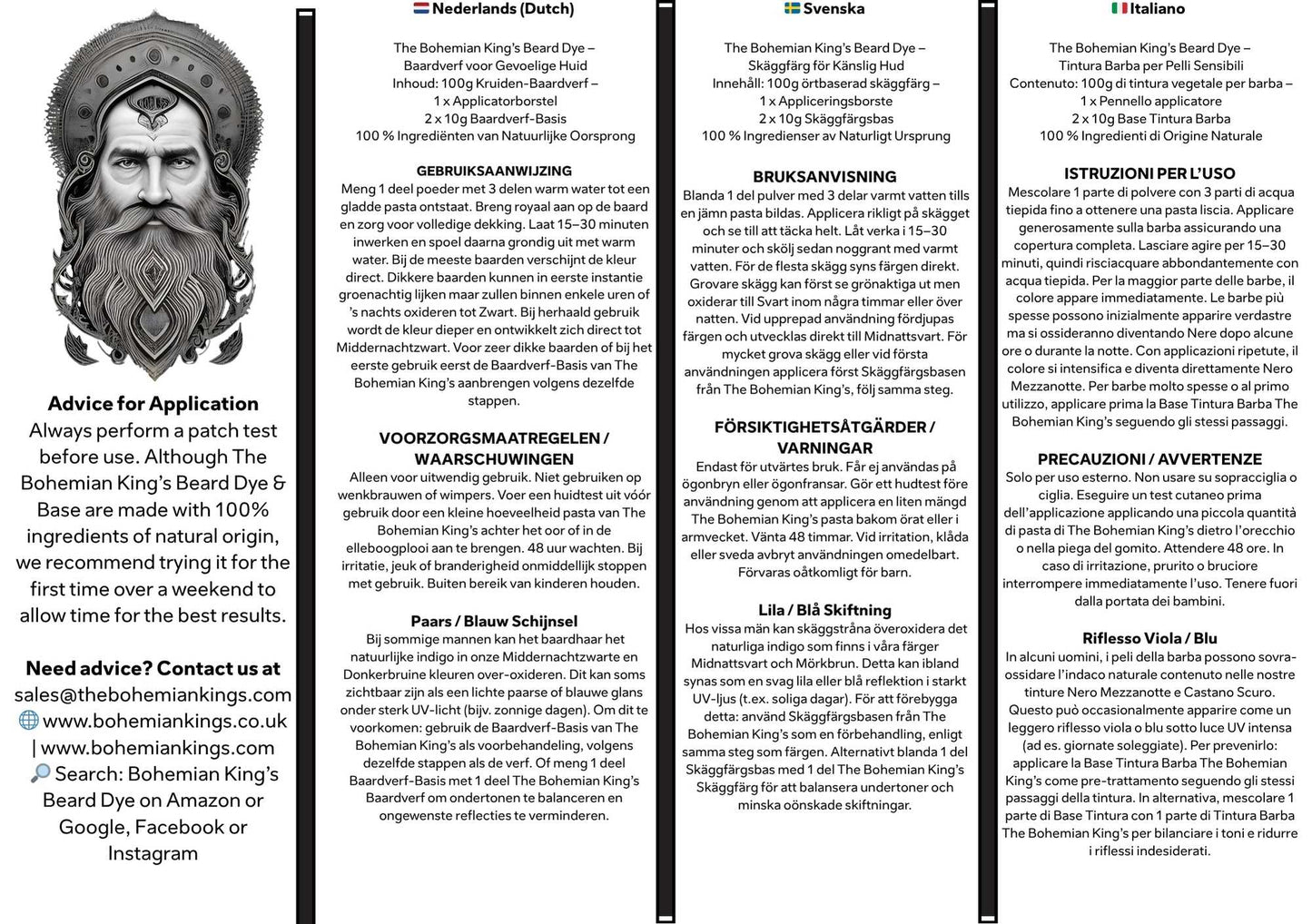
No cosmetic colour product can guarantee that a reaction will not occur. A patch test should still be completed 48 hours before every application.
The Bohemian King’s
Beard Dye Formulated Without PPD or Ammonia
Explore four plant-based beard dye shades. Always follow the instructions and complete a patch test 48 hours before use.
Explore Beard Dye Shades →Why Patch Testing Matters
A patch test is a precautionary step completed before using a cosmetic colour product more widely. It does not guarantee that a later reaction cannot occur, but it can help identify an unwanted response before the product is applied across the beard area.
Complete the patch test exactly as described in the product instructions and repeat it 48 hours before every application, even if you have used the same shade before.
Do not proceed with the full application if the test area develops redness, itching, swelling, discomfort or another unexpected response.
What to Check Before Applying Beard Dye
| Check | Why it matters |
|---|---|
| Read the full instructions | Application times, mixing ratios and warnings vary between products. |
| Complete a patch test | Carry it out 48 hours before every use and do not proceed if an unexpected response appears. |
| Check the skin | Do not apply to broken, inflamed, sunburned or recently irritated skin. |
| Use the correct ratio | Follow the stated powder-to-water ratio and do not improvise the formulation. |
| Keep within the application time | Leaving a cosmetic colour product on longer is not a safe shortcut to a darker result. |
| Rinse thoroughly | Remove all visible residue from the beard and surrounding skin. |
Using The Bohemian King’s Beard Dye
The Bohemian King’s beard dye is a plant-based powder system formulated without PPD or ammonia. It is intended for beard and moustache hair of at least 1 cm.
Each beard dye shade includes Beard Dye Colour Base to support preparation before the main colour step. Always use the products according to the supplied instructions rather than adapting the process yourself.
For the full preparation, mixing and application method, read our step-by-step beard dye application guide.
When to Stop and Seek Advice
Stop using the product immediately if you experience an unexpected reaction during application. Rinse the beard and surrounding skin thoroughly according to the product instructions.
Seek urgent medical help if you experience signs of a severe reaction, such as difficulty breathing or significant swelling. For ongoing, significant or worsening concerns, contact an appropriate healthcare professional.
For general information, you can also read the NHS guidance on hair dye reactions.
More Beard Colour Guidance
- Best Beard Dye Colours for 2026
- How to Colour a Grey Beard Naturally
- The 10 Most Popular Beard Styles in 2026
Frequently Asked Questions
Can beard dye cause skin irritation?
Individual skin responses vary. Some people may experience discomfort or irritation after using a cosmetic colour product, which is why following the instructions and completing a patch test are important.
Should I patch test every time?
Yes. Complete the patch test 48 hours before every application, even if you have used the same product or shade previously.
Is a beard dye formulated without PPD completely risk-free?
No. The absence of PPD does not mean that a cosmetic colour product is risk-free or suitable for everyone. Other ingredients may still cause an individual response.
Can I use beard dye on recently shaved or irritated skin?
Do not apply beard dye to broken, inflamed or recently irritated skin. Wait until the skin has recovered and follow the product instructions.
Can I leave beard dye on longer for a darker result?
No. Follow the stated application time. Leaving a product on longer than directed is not an appropriate way to intensify the result.
What should I do if I previously reacted to beard dye?
Seek advice from an appropriate healthcare professional before using another cosmetic colour product. Do not assume that changing brands or choosing a different formulation removes all risk.
Looking for a Beard Dye Formulated Without PPD or Ammonia?
Compare Light Brown, Brown, Dark Brown and Midnight Black. Every pack includes Beard Dye Colour Base. Patch test 48 hours before every use.
View the Beard Dye Collection →Important Information: This article is provided for general information only and is not medical advice. Always follow the product instructions and complete a patch test 48 hours before use. If you have concerns about using any cosmetic colour product, seek advice from an appropriate healthcare professional before application.